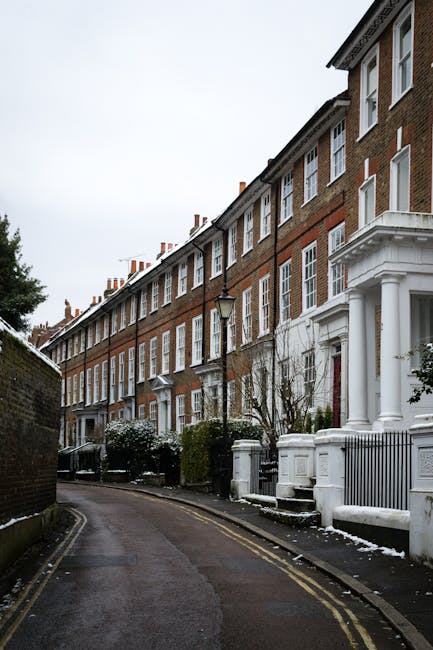
Muswell Hill Flat Removals: What to Know About Driveway Access
If you are planning a flat move in Muswell Hill, driveway access can be the small detail that makes the whole day smooth, or awkward in a way you only notice when the van is already outside. Muswell Hill flat removals what to know about driveway access is not just about whether a vehicle can pull up to the door. It affects timing, parking, carry distance, labour, lift use, and how much strain you put on yourself and the removal team. In a busy North London street, that matters more than most people expect. This guide walks through the practical side: what driveway access really means, why it changes the move, what to check in advance, and how to avoid the annoying little setbacks that turn a quick flat move into a long day.
To be fair, most moving problems are not dramatic. They are usually small: a narrow approach, a low wall, a shared drive, an overhanging tree, or nowhere sensible for the van to wait. Small things. Big impact. Let's make them manageable.
Why Muswell Hill flat removals what to know about driveway access Matters
Driveway access sounds simple until you are standing in the street with a sofa, a box of kitchen plates, and a van that cannot quite get where you hoped it would. In flat removals, access decides how far everything must be carried, how many hands are needed, and how long the loading stage will take. In a place like Muswell Hill, where roads can be tight and parking can be limited, that can change the entire rhythm of the move.
For a ground-floor flat with direct access, a removal may be straightforward. For a first- or second-floor flat with a shared driveway, a narrow turning point, or steps leading from the pavement, the job becomes more technical. That does not mean difficult, necessarily. It just means planning matters. A lot.
There is also a safety angle. If a van blocks the wrong part of a drive, or sits at an angle on a sloping entrance, lifting heavy furniture becomes riskier. Damage to walls, railings, car mirrors, and flooring is also more likely when people are rushing. Good access planning reduces all of that. It keeps the move calm. Well, calmer.
In practical terms, the question is not only "Can the van get close?" It is also:
- Can the team park legally and safely?
- Is there enough room to open doors or tail lifts?
- Will the carry route be short and clear?
- Are there obstacles like low branches, gates, or tight bends?
- Will neighbours, residents, or shared access arrangements be affected?
If you answer those questions early, you avoid the usual moving-day scramble. And that is worth its weight in packing tape.
How Muswell Hill flat removals what to know about driveway access Works
Driveway access is part of the wider access plan. A removal team usually wants to understand three things before the move day: where the vehicle can stop, how far items must be carried, and what the route looks like between the flat and the van.
In a flat move, the access flow often looks like this:
- Pre-move assessment of the property and street layout.
- Confirmation of parking or stopping space near the entrance.
- Planning the loading route from the flat to the vehicle.
- Protecting shared surfaces, door frames, and tight corners.
- Loading in a sequence that suits the available space and the fragility of the items.
If there is a driveway, the details matter. Is it shared? Is it steep? Is it wide enough for a medium van, or only suitable for smaller vehicles? Can the team reverse in, or is turning around difficult? Does the drive belong to the property, or is it a communal access point with strict rules? These are not picky questions. They are the whole game.
Sometimes the answer is that the van cannot use the driveway at all, even though it technically exists. Low branches, width restrictions, sharp corners, or a fragile surface may make direct access a poor option. In that case, a short roadside load may actually be the safer and faster choice. The right answer is not always the obvious one.
For example, a second-floor flat on a narrow Muswell Hill street might be quicker to move from a carefully chosen roadside position than from a cramped driveway with awkward turning space. That surprises people sometimes. But moving is full of these little trade-offs.
Key Benefits and Practical Advantages
Good driveway access planning makes a flat move more efficient, and the benefits show up in a few very real ways.
1. Less carrying distance
The shorter the carry, the less tired everyone gets. That means fewer pauses, less chance of dropped items, and a better pace overall.
2. Lower risk of damage
When a team can move furniture in a clean line, there is less bumping, twisting, and squeezing through tight gaps. That helps protect both the property and the items being moved.
3. Better time control
Access delays can add up quickly. A clear route means the move is more predictable, which is especially helpful if you have building access windows or travel plans later in the day.
4. Easier coordination with neighbours or building rules
Shared entrances and drives can create friction if people are not warned in advance. A proper plan keeps everyone happier. Not glamorous, but important.
5. Lower stress on moving day
When the van is where it should be and the team knows the route, you can focus on the move itself instead of the parking situation. That alone can make the day feel ten times more manageable.
Expert summary: In flat removals, driveway access is rarely just a parking question. It affects time, safety, carrying effort, and the practical shape of the entire move. The better the access plan, the smoother the rest of the day tends to be.
Who This Is For and When It Makes Sense
This topic matters for anyone moving from or to a flat in Muswell Hill, but it becomes especially relevant in a few common situations.
- You live in a flat with a shared or narrow driveway.
- Your building has a steep approach, a tight turning area, or limited stopping space.
- You are moving furniture-heavy items like wardrobes, beds, sofas, or appliances.
- You are in a block where residents, permit rules, or access gates could slow things down.
- You are trying to keep the move as quick and low-stress as possible.
It also matters if you are comparing different removal services. Some teams are comfortable with tight London access and smaller vans, while others prefer easy curbside loading. That is not a criticism. It is simply a question of fit. The right team for a long driveway and awkward staircase may not be the right team for a simple roadside load.
If you are a landlord, letting agent, or tenant coordinating a turnover, access planning becomes even more useful because timing can be tight. A late van arrival or a blocked driveway can throw off the rest of the schedule. And nobody wants that on move day, honestly.
Step-by-Step Guidance
If you want to handle driveway access properly, work through the move in a practical order. It does not need to be complicated.
1. Measure the access properly
Check the width of the driveway, the gate opening, and any tight corners. If you can, note whether a van can enter and leave in a straight line or whether it has to reverse, turn, or swing wide. A quick walk with a tape measure can save a lot of guesswork.
2. Look for hidden obstacles
Watch out for low branches, uneven paving, loose gravel, steep slopes, speed bumps, and overhanging structures. Even a small lip at the entrance can matter when moving heavy trolleys or furniture with castors.
3. Check parking and stopping options
Can the van stop directly outside, or will it need a permit space, a loading bay, or a short roadside position? If the answer is "not sure," find out before the move rather than during it. Streets in Muswell Hill can be busier than people expect, especially later in the morning.
4. Confirm any building or neighbour restrictions
Some flats have quiet hours, access codes, shared courtyards, or resident-only spaces. Make sure you know how those rules work, because a missing code or an awkward neighbour conversation can hold the whole job up.
5. Plan the loading order around the access
If access is tight, items should be moved in a sensible sequence. Large items first, fragile items protected and grouped, smaller boxes stacked efficiently. A good order reduces clutter in hallways and prevents bottlenecks near the door.
6. Protect surfaces and pinch points
Door frames, hallway corners, and driveway edges can all take a knock if you rush. Floor coverings, furniture blankets, and corner protection are worth using if the route is tight or the path is shared.
7. Build in a little time buffer
Truth be told, most moves benefit from a buffer. If the access turns out to be better than expected, brilliant. If not, you have room to adapt without panic.
One small but useful habit: take a few photos of the driveway and approach route before move day. If you are discussing the job with a removal team, those pictures often explain more than a long message ever could.
Expert Tips for Better Results
Here are the bits that often make the difference between "fine" and "surprisingly smooth."
- Use the nearest workable stopping point, not the nearest possible one. If a van can technically get closer but the angle is horrible, a slightly further stop may be faster overall.
- Think about the weather. Rain makes sloped drives and steps more awkward, and it can turn a quick carry into a careful shuffle. A damp morning changes everything a bit.
- Keep the entrance clear. Wheelie bins, bikes, prams, and plant pots have a habit of sitting exactly where they are least welcome.
- Tell the team about fragile access in plain language. "Narrow gate," "steep drive," "sharp left turn," "low arch" are all more useful than "a bit tricky."
- Reserve space early if parking is tight. In some streets, the van's position matters as much as the route itself.
- Don't assume a driveway automatically solves parking. Some drives are too narrow, too steep, or too shared to use comfortably.
A small practical tip from experience: if you have one item that is awkwardly large, like a wardrobe or headboard, test it mentally against the route from the flat to the van. Can it turn the corner? Can it clear the banister? That quick check often catches the one problem that causes the most stress.
And yes, sometimes the "problem item" is not the sofa. It is the oddly shaped lamp that nobody respected until move day. They always have a surprise in them.
Common Mistakes to Avoid
Most access problems are avoidable. The usual mistakes are simple, which is exactly why they happen so often.
- Leaving access checks until the morning of the move. By then, there is very little room to fix anything.
- Forgetting to account for height as well as width. A low gate or overhang can be just as limiting as a narrow driveway.
- Assuming the van will fit because a car fits. That is not a safe comparison. Removal vehicles need more turning and opening space.
- Not telling the removal team about shared access. Shared drives, courtyards, and basement-style entrances often need more careful coordination.
- Blocking the route with loose boxes. A tidy path is faster and safer.
- Ignoring parking permissions. Even a great driveway is no help if the vehicle cannot legally stop where it needs to.
There is also a communication mistake people make: they describe the property, but not the access route. Those are different things. A lovely flat with a difficult approach is still a difficult approach. Slightly annoying, but true.
Tools, Resources and Recommendations
You do not need specialist equipment to plan access well, but a few simple tools make the job easier.
- Tape measure: for drive width, gate openings, and hallway pinch points.
- Phone camera: for quick photos of the route, steps, and vehicle stopping point.
- Notebook or notes app: for storing access details, codes, and timing windows.
- Furniture blankets and straps: to keep items protected and secure during a short or awkward carry.
- Floor protection: useful if the route crosses polished flooring, tight halls, or shared entrances.
If you are comparing removal options, it can help to look at a fuller service rather than just a vehicle and driver. For example, a team offering flat removals may be better suited to stairwells, tight entrances, and the kind of access questions that come up in Muswell Hill. If your move is smaller and the driveway is not especially generous, a small removals option may also make sense. And if you need an all-in approach that combines moving and short-term holding of items, removals and storage can give you extra breathing room when access or timing is not ideal.
Those are practical options, not magic fixes. Still, the right service match can remove a lot of pressure.
Law, Compliance, Standards, or Best Practice
For flat removals, access planning should follow normal UK best practice around safety, parking, and considerate use of shared spaces. Exact arrangements vary depending on the street, building, landlord rules, and local parking conditions, so it is sensible to check what applies to your property rather than rely on assumptions.
From a best-practice point of view, a good mover should:
- work safely around steps, slopes, and narrow routes;
- avoid blocking emergency access or neighbour entrances;
- protect the property and common areas where possible;
- handle heavy items with suitable care and lifting technique;
- confirm access details in advance rather than improvising on the day.
Insurance is also worth checking. If a driveway is tight or the access route is awkward, the risk of scuffs and minor damage goes up. That is just common sense, really. If you want more confidence around this side of things, the company's insurance and safety information can help clarify how they approach protection and risk. For a broader sense of how the business handles policies and standards, you can also review the health and safety policy.
Best practice also includes being honest about limitations. If your driveway is too narrow for the van, say so. If the entrance slope is steep, mention it. Nobody benefits from optimism that turns into a blocked vehicle and a frustrated team. A clear picture on both sides is the safest route.
Options, Methods, or Comparison Table
When thinking about access, most flat moves fall into one of a few practical setups. Here is a straightforward comparison.
| Access setup | What it usually means | Typical advantage | Common drawback |
|---|---|---|---|
| Direct driveway access | Van can stop close to the entrance, with minimal carrying distance | Fast loading and easier handling | Can still be awkward if the drive is steep or narrow |
| Shared driveway or courtyard | Access is possible, but must be coordinated with others | Useful if managed well | More chance of delay or obstruction |
| Roadside loading | Van parks on the street and items are carried from the flat | Flexible and often simpler legally | Longer carry, more physical effort |
| Restricted access with permit or timed window | Stopping is allowed only under certain conditions | Can work well when planned carefully | Less room for last-minute changes |
For many Muswell Hill flats, the best choice is not the one with the shortest theoretical distance. It is the one with the least friction overall. A calm, legal roadside stop can beat a tight driveway that needs three awkward manoeuvres and a lot of patience.
Case Study or Real-World Example
Here is a realistic example, based on the kind of situation people often run into in Muswell Hill.
A couple moving from a first-floor flat had a driveway that looked promising at first glance. The entrance was wide enough for a car, but not quite as easy for a removal van. There was also a low branch at the front and a slight slope toward the pavement. On paper, it seemed fine. In practice, it would have meant an awkward reverse, a tight angle near the wall, and very little room to swing larger furniture.
Instead of forcing the van onto the drive, the team chose a nearby roadside stopping point and protected the hallway and doorway carefully. The carry distance was a bit longer, yes, but the loading was steadier and safer. The move took place without the stop-start frustration that often comes with overconfident access planning. The couple admitted later that they had been focusing on whether the van could enter the drive, rather than whether it should.
That is the real lesson. Access is not a pride contest. It is a practical decision.
Another small real-world detail: a narrow driveway can feel very different when two people are carrying a tall chest of drawers at chest height. The space that looked generous from the front suddenly feels tiny. Once you have seen that happen, you never quite look at a driveway the same way again.
Practical Checklist
Use this checklist before moving day. It is simple, but it covers the important bits.
- Confirm whether the driveway is private, shared, or unavailable for the van.
- Measure the width, gate opening, and any tight corners.
- Check for slope, uneven ground, or surface damage.
- Look for low branches, overhangs, or other height restrictions.
- Confirm where the van can legally and safely stop.
- Check for parking permits, resident-only rules, or timed restrictions.
- Tell the removal team about stairs, codes, lifts, and access windows.
- Clear bins, bikes, plants, and loose items from the route.
- Protect floors, door frames, and any delicate surfaces.
- Keep keys, contact numbers, and building instructions easy to hand.
If you can tick most of those off before the day begins, you are in much better shape than most movers. Simple, but effective.
Get a free quote today and see how much you can save.
Conclusion
Driveway access can look like a small detail in a flat move, but in Muswell Hill it often shapes the whole experience. The difference between a smooth removal and a stressful one is usually found in the practicalities: where the van stops, how far items must be carried, what the route looks like, and how well everyone understands the space before the first box is lifted.
If you treat access as part of the moving plan rather than an afterthought, you give yourself more control, less risk, and a noticeably calmer day. That is especially true for flats, where shared spaces, stairs, and parking pressure all come into play. A little preparation goes a long way.
And if the access is awkward? Fine. Plenty of moves are. With the right planning, it is still very doable. Often easier than it first looks, actually.
At the end of the day, the best move is the one that feels steady, organised, and human enough to breathe through.
Frequently Asked Questions
Do I need to measure my driveway before a flat removal?
Yes, if there is any doubt at all. Measuring the width, gate opening, slope, and turning space helps avoid surprises. Even a few extra centimetres can matter with a removal van.
What if the van cannot fit on my driveway?
That is common, and it does not always mean a problem. The team may use roadside loading instead, which can be safer and more practical if the driveway is tight or awkward.
Is a shared driveway a problem for removals?
Not necessarily, but it does need more planning. You may need to coordinate with neighbours, keep the route clear, and confirm whether any access rules apply on the day.
Should I tell the removal team about a steep driveway?
Absolutely. A steep slope changes how items are moved and whether the van should use the drive at all. It is one of those details people sometimes understate, and then regret later.
Can a removal team work around parking restrictions?
Often yes, provided the access plan is sorted in advance. They may need a legal stopping point, a permit space, or a timed loading window, depending on the street.
What items are hardest to move when driveway access is poor?
Large furniture such as wardrobes, sofas, beds, and appliances are usually the most awkward. Long carries and tight corners make these items more difficult to handle safely.
How early should I check access before moving day?
As early as possible. Ideally, check during the planning stage, not the morning of the move. That gives you time to adjust the van size, parking plan, or moving approach.
Does a driveway always make a move faster?
No. A driveway can help, but only if it is actually usable for the vehicle and the route. A cramped or steep drive may be less efficient than a clean roadside stop.
What should I photograph for the removal team?
Take photos of the driveway entrance, the route to the flat, any gates or steps, and the area where the van would stop. A few clear images often answer more questions than a long message.
Are there safety issues with tight driveway access?
Yes. Tight access can increase the chance of bumps, slips, strains, and property damage if people rush. Good planning, steady lifting, and clear communication reduce that risk.
Is Muswell Hill a difficult area for flat removals?
It can be, mainly because local streets may be narrower and parking can be limited. That said, with a good access plan, most moves are still perfectly manageable.
What is the best way to prepare if I live in a flat with awkward access?
Measure the route, check parking, warn the removal team early, and clear the entrance. If you are unsure, ask for a service that suits tighter access and smaller urban moves. A little prep goes a long way, honestly.