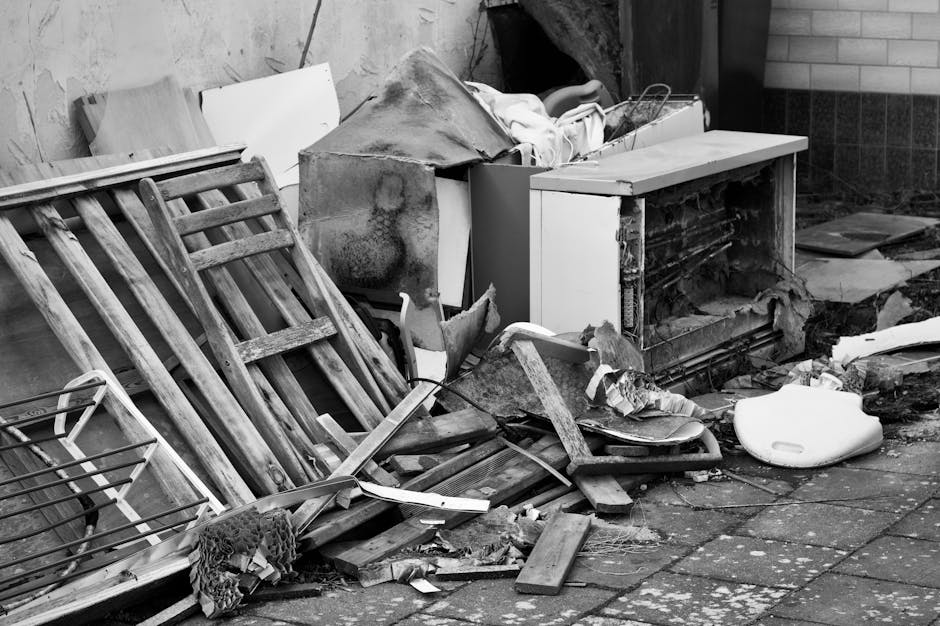
Haringey Council Bulky Waste Rules and Removal Fines: A Practical Guide for Homeowners, Landlords and Movers
If you are dealing with old furniture, broken appliances, renovation waste, or a pile of items that simply will not fit into your household bins, Haringey Council bulky waste rules and removal fines can become relevant very quickly. One wrong move and that "quick clear-out" can turn into a chargeable collection, a fly-tipping risk, or a fine you did not budget for. Not fun, really.
This guide explains how bulky waste is usually handled, what tends to trigger fines, where people go wrong, and how to stay on the right side of the rules without making the process harder than it needs to be. You will also find a step-by-step approach, a comparison of disposal options, and a checklist you can use before anything leaves your property.
Expert summary: the safest approach is simple: identify the item correctly, separate reusable from waste, use the proper collection route, and keep proof of lawful disposal. That one habit saves a lot of stress later.
Why Haringey Council bulky waste rules and removal fines Matters
Bulky waste rules matter because large items do not behave like everyday rubbish. A mattress, wardrobe, sofa, fridge, or broken desk takes up space, can contain materials that need special handling, and may be picked up only through certain channels. If you leave it beside a bin, put it out on the wrong day, or hand it to an unlicensed collector, you may be creating a local environmental problem and a legal headache at the same time.
There is also a very practical side to this. Council collections, private removals, and reuse routes all work differently. People often assume that "someone will take it away" is enough. It is not always enough. In real life, that vague approach is where fines, complaints, and awkward calls back from neighbours begin.
For residents in Haringey, the rules also sit alongside everyday realities: narrow stairwells, parking restrictions, shared front gardens, flats with no lift, and a constant battle with space. A bulky waste item left on a pavement can become an obstruction in minutes. On a rainy evening, with a bit of breeze, a damaged chair can look a lot less harmless than it sounded in the living room. Truth be told, councils see this sort of thing all the time.
The main point is not just avoiding a fine. It is avoiding the chain reaction that often follows: missed collection, items moved into the wrong place, complaints from neighbours, and the possibility of enforcement if waste is dumped unlawfully.
Key takeaway: if an item is too large for normal collection, treat it as regulated waste from the outset. Decide how it will be disposed of before you move it outside.
How Haringey Council bulky waste rules and removal fines Works
Bulky waste is usually understood as household items that are too large for standard wheelie bin collection. Think sofas, armchairs, mattresses, large appliances, wardrobes, tables, and similar oversized items. The exact acceptance rules, booking methods, and restrictions can vary over time, so the safest habit is to check the current council guidance before you put anything out.
In practice, the process normally falls into a few broad stages:
- Identify the item. Is it reusable, recyclable, repairable, or true waste?
- Check the collection route. Some items may need a booked collection, while others may be better taken to a reuse or recycling route.
- Prepare the item safely. Remove sharp edges, empty drawers, tape loose parts, and keep paths clear.
- Place it correctly. Items are usually expected to be presented in the approved location and at the approved time.
- Keep evidence. Save booking confirmations, receipts, or collection records where possible.
Where fines enter the picture is usually less about the object itself and more about behaviour. Fly-tipping, dumping waste on a street, leaving items out without permission, or using someone who is not authorised to take waste away can all lead to enforcement action. A fine may follow if the authority believes the waste was handled irresponsibly or illegally.
People sometimes ask, "But what if the item was only there for a short time?" Unfortunately, short time does not always mean no risk. If it obstructs the pavement or looks abandoned, it can still attract a complaint. And once a complaint is logged, the item becomes part of a wider enforcement picture. Not ideal.
If you are moving house, clearing a flat, or emptying storage, timing matters a great deal. Services such as house removals or small removals can be useful when items need to be shifted carefully rather than dumped at the kerb and left to chance.
Key Benefits and Practical Advantages
Following the proper bulky waste route is not only about compliance. It also makes the whole process calmer and, frankly, less messy.
- Less risk of fines: you avoid the common triggers that lead to enforcement action.
- Safer handling: bulky items often have weight, sharp fixings, or awkward shapes.
- Better recycling outcomes: many items can be separated, reused, or recycled rather than discarded blindly.
- Cleaner property handover: useful when tenants are leaving, landlords are preparing a re-let, or estates need tidying.
- More predictable costs: proper planning reduces last-minute charges and emergency disposal.
There is also a quieter benefit that many people only appreciate after the fact: peace of mind. When the items are gone properly, you are not wondering whether someone will complain next week or whether a neighbour saw the pile by the front gate. That matters more than it sounds.
For larger clearances, a combined removals-and-storage approach can help. If you need to move some items out before deciding what stays, removals and storage can be a sensible halfway house. It is often easier to sort calmly than under pressure.
Who This Is For and When It Makes Sense
This topic is relevant to a fairly wide group of people, and not just those with a broken sofa on the pavement.
- Homeowners clearing lofts, garages, spare rooms or gardens.
- Tenants moving out and trying not to lose a deposit over leftover items.
- Landlords preparing a property after an end-of-tenancy clearance.
- Estate executors dealing with inherited furniture and household contents.
- Businesses replacing office furniture, shelving, or equipment.
- Students disposing of unwanted furniture or making end-of-term decisions.
- People moving home who suddenly discover three chairs they forgot they owned.
It makes sense to think about the rules before the furniture is moved downstairs. A lot of people assume the clear-out will "sort itself out later." In reality, later is usually the moment when the weather turns, parking gets awkward, and nobody wants to carry a wardrobe back up the stairs.
If the issue is temporary overflow rather than disposal, storage can be the safer answer. Short bursts of sorting time can be incredibly useful. Short-term storage can buy breathing room while you decide what to sell, keep, donate, or remove.
For households that are between homes or downsizing, household storage can reduce pressure and keep valuable items out of the waste stream altogether. And if the move itself is complicated, flat removals are often more realistic than trying to tackle everything in one giant day.
Step-by-Step Guidance
Here is a practical way to handle bulky waste in Haringey without making extra work for yourself.
1. Separate what is waste from what is still useful
Start with a simple question: does this item actually need to be thrown away? Many items only look rubbish because they are inconvenient. If a table can be reused, repaired, or passed on, that may be better than disposal. If it is unsafe, broken beyond repair, or contaminated, then disposal becomes the cleaner route.
2. Make a list before moving anything
Write down each item and note its approximate size, condition, and material. That sounds dull, but it saves mistakes. A list also helps if you later need to compare collection options or request a quote.
3. Check whether the item needs special handling
Some items are awkward for legal and practical reasons. Fridges, freezers, and electrical appliances may have additional handling considerations. Mattresses, mirrors, and broken furniture can create safety risks. Anything with liquids, needles, chemicals, or sharp metal parts should be treated with extra care.
4. Choose the disposal route
Options commonly include council collection, private removal, reuse, donation, or storage while you sort the rest. For heavier clearances, a professional team can save hours of lifting and sorting. If you need a proper moving service rather than a one-off carry-out, man and van support can be a practical middle ground.
5. Book and confirm everything
Once you choose a route, get the date, item list, location, and any presentation instructions confirmed. Keep the confirmation somewhere you will actually find it. The back of an envelope is not ideal, surprising as that may be.
6. Prepare access
Clear the hallway, move cars if needed, and make sure the crew or collector can reach the items without squeezing past bikes, prams, or an overenthusiastic plant pot. A few extra minutes spent on access can save a lot of stress on collection day.
7. Keep evidence after removal
Save any booking email, receipt, or message showing lawful removal. If a dispute comes up later, that record matters. Especially for landlords, agents, and businesses, proof is worth its weight in gold.
Expert Tips for Better Results
These are the small things that tend to make the biggest difference.
- Sort by action, not by room. Use labels like keep, repair, donate, recycle, remove. It speeds decisions up.
- Do the awkward items first. If a wardrobe needs dismantling, tackle that before you start on cushions and boxes.
- Keep pathways clear. This protects the team and reduces the chance of damage.
- Don't overfill the kerbside area. Even a tidy pile can look abandoned if it spreads too far.
- Take photos before and after. Handy for rentals, estates, and shared properties.
- Use storage when the decision is not final. It is often cheaper than replacing the wrong thing later.
One thing we notice again and again is that people wait too long to sort sentimental items. Old furniture can sit in a hallway for weeks because nobody wants to be the one to choose. That is normal, by the way. But if the clock is ticking on a move-out date, make a decision window and stick to it.
For business users or householders with a lot of items in transition, secure storage can keep valuable pieces safe while the disposal plan is finalised. If you need a more specialised setup, furniture storage may be more appropriate than trying to leave items in a spare room for weeks.
Common Mistakes to Avoid
These are the errors that tend to lead to fines, complaints, or unnecessary cost.
- Leaving items on the street without checking the rules. What feels "temporary" can still be treated as unlawful dumping.
- Using an unlicensed collector. If they dump the waste elsewhere, the paper trail can come back to you.
- Mixing bulky waste with general rubbish. It makes sorting harder and may lead to rejection.
- Forgetting electrical items. Some appliances need special handling and should not be treated like old shelving.
- Blocking entrances or communal spaces. Shared buildings are especially sensitive to obstruction.
- Assuming a neighbour's permission is enough. It usually isn't. Property access is not the same as disposal permission.
There is also a softer mistake: not planning for time. If you are clearing a room at 8pm after work, tired, with the kettle on and the dog barking, decisions get sloppy. A rushed decision is often the one you regret later.
Tools, Resources and Recommendations
You do not need anything fancy here, just a few solid habits and a couple of practical tools.
- Measuring tape: useful for checking whether an item can be dismantled or moved safely.
- Marker pens and labels: great for sorting items into keep, donate, remove, or store.
- Strong sacks and tape: handy for loose fittings, screws, and smaller breakable parts.
- Phone camera: before-and-after photos help with records.
- Notebook or checklist: simple, but effective.
If you need help with items that are not quite rubbish and not quite ready to keep, a staged approach works well. Use packing services if you want fragile items boxed properly before a move. If the issue is office-related, office removals and office storage can reduce clutter without pushing usable items into the waste stream.
For people balancing a bigger home move, local removals can simplify the logistics. And if you are trying to reduce the amount you throw away in the first place, it is worth thinking in terms of recycling and sustainability rather than pure disposal. That mindset is often the difference between a tidy clearance and a wasteful one.
Law, Compliance, Standards, or Best Practice
This is one of those areas where the broad principles are more important than pretending every detail never changes. In the UK, the safest approach is to assume that householders remain responsible for waste until it is handed to a lawful, appropriate collector or disposed of through an approved route. If waste is fly-tipped or handled irresponsibly, enforcement action can follow.
Best practice usually means:
- confirming the collection method before leaving items out;
- using reputable, traceable disposal routes;
- keeping records where possible;
- separating recyclable or reusable items;
- avoiding obstruction of pavements, entrances, and shared spaces;
- checking whether an item has special handling needs.
If you are a landlord, letting agent, or business owner, your expectations should be even tighter. A tenant's mistake can still create reputational and operational hassle for you. In commercial settings, a more formal clearance process is often sensible, especially for desks, filing units, IT equipment, or stockroom contents.
For documentation-heavy or long-term asset moves, document storage and business storage can help keep important materials away from the waste bin entirely. That may sound obvious, but in a hurried office move, obvious things get overlooked.
Options, Methods, or Comparison Table
Choosing the right route depends on speed, cost, item type, and whether you need proof of disposal. Here is a straightforward comparison.
| Option | Best for | Pros | Watch-outs |
|---|---|---|---|
| Council bulky waste collection | Standard household bulky items | Simple, official route, often suitable for one-off items | May have booking rules, item limits, and waiting times |
| Private bulky item removal | Multiple items, awkward access, urgent clearances | Flexible, quicker, can include lifting and loading | Must use a reputable provider and keep records |
| Reuse or donation | Usable furniture and appliances | Better for the environment, may avoid disposal fees | Items need to be clean, safe, and accepted |
| Storage first, decision later | Items you are not ready to discard | Reduces rushed disposal and avoids mistakes | Costs more than doing nothing, obviously, but often saves money overall |
The choice usually comes down to urgency and certainty. If you need the items gone today and the access is awkward, professional help is often worth it. If you are deciding what to keep after a move, storage can be the smarter pause button. And if you only have one item, the formal council route may be the cleanest solution.
Case Study or Real-World Example
A common scenario looks like this: a family in Haringey is moving from a two-bedroom flat into a smaller place. Over a weekend, they sort through a spare room and discover a broken bed frame, a chipped dining table, a sofa that no longer fits the new layout, and three boxes of books they actually want to keep. The temptation is to drag everything outside and deal with it later. Very human. Very risky.
Instead, they split the task. The books go into storage. The bed frame is dismantled. The sofa is assessed for reuse or removal. The dining table is measured and checked against collection options. A removals team helps with transport, and the family keeps the confirmation records. Nobody leaves a mystery pile on the pavement, no neighbour complains, and the move feels much less frantic.
That sort of outcome is not glamorous, but it is the kind of thing that saves people money and embarrassment. In our experience, the best clearances are the boring ones. Everything has a place, a label, and a plan. Not exciting, but brilliant.
Practical Checklist
Use this before you put out, move, or book removal of any bulky item.
- Have I checked whether the item can be reused, donated, or repaired?
- Do I know whether it needs special handling?
- Have I confirmed the correct collection or disposal route?
- Have I avoided leaving anything on the street without permission?
- Is the access route clear and safe?
- Have I separated screws, doors, drawers, and loose parts?
- Have I kept booking details or proof of disposal?
- Do I need temporary storage instead of immediate disposal?
- Have I thought about neighbours, parking, and timing?
- Am I confident the collector or mover is legitimate?
If you tick every box, you are in a much better position. Not perfect, maybe, but much better.
Conclusion
Haringey Council bulky waste rules and removal fines are not really about making life difficult. They are there to prevent unsafe dumping, keep streets clear, and make sure oversized waste is handled properly. The problem is that bulky items are awkward by nature, so people often rush the decision and create avoidable risks.
The easiest way through is to plan early, identify the right disposal route, keep records, and use storage when you are not sure what should stay or go. That approach is calmer, safer, and usually cheaper than fixing a rushed mistake later. If you are clearing a home, flat, office, or storage unit, a little structure now saves a lot of mess afterwards.
Get a free quote today and see how much you can save.
And if you are standing there looking at a tired old sofa in the hallway at 9pm, wondering whether it is really worth all the hassle, the honest answer is yes - the right plan is worth it. One careful decision now can make the whole rest of the week feel lighter.
Frequently Asked Questions
What counts as bulky waste in Haringey?
Bulky waste usually means large household items that do not fit into normal bin collections, such as sofas, mattresses, wardrobes, tables, and large appliances. If in doubt, treat it as bulky until you confirm otherwise.
Can I leave bulky waste outside my property for collection?
Only if it is being presented according to the correct collection rules and timing. Leaving items out informally can create a fly-tipping issue, especially if they block the pavement or remain unattended.
What happens if I dump bulky waste on the street?
Unlawfully dumping bulky waste can lead to enforcement action and fines. It may also create a nuisance for neighbours and a bigger cleanup problem than the original item ever was.
Do I need proof that my bulky waste was removed properly?
Yes, keeping proof is wise. A receipt, booking confirmation, or written record can help if there is any dispute later, particularly for landlords, tenants, and businesses.
Are private bulky waste collectors allowed?
They can be, but you should use a reputable and lawful provider. If waste is later dumped illegally, poor record-keeping can leave you exposed to questions about where it came from.
Can I put electrical items out with bulky waste?
Some electrical items may need separate handling. Always check whether the appliance is accepted through the chosen route and whether cables, batteries, or fluids need removal first.
Is it cheaper to use storage before disposal?
Sometimes, yes. If you are undecided about items, short-term storage can be cheaper than replacing something you later realise you wanted to keep. It also reduces rushed disposal.
What is the safest way to get rid of large furniture during a move?
The safest route is to plan ahead, separate reusable items, use a proper collection or removal service, and avoid leaving anything outside without permission. A removals team can help with lifting and access.
What if my landlord tells me to remove bulky items quickly?
Act promptly, but do not cut corners. If you need a fast solution, book removal, keep your records, and consider temporary storage for anything you are not ready to discard.
Can bulky waste fines be avoided just by moving items out of sight?
No. Moving waste behind a building, into a communal area, or to another part of the street does not make it lawful. If anything, it can make the situation worse.
What should businesses do with old office furniture?
Businesses should use a traceable, lawful route and keep records of what has been removed. If some items are still useful, office storage can be a better fit than immediate disposal.
When is it better to use a removals service instead of a waste collector?
If items are still valuable, need careful handling, or are being moved as part of a wider property clear-out, a removals service is usually the better option. Waste collectors are best for items that are truly ready to go.